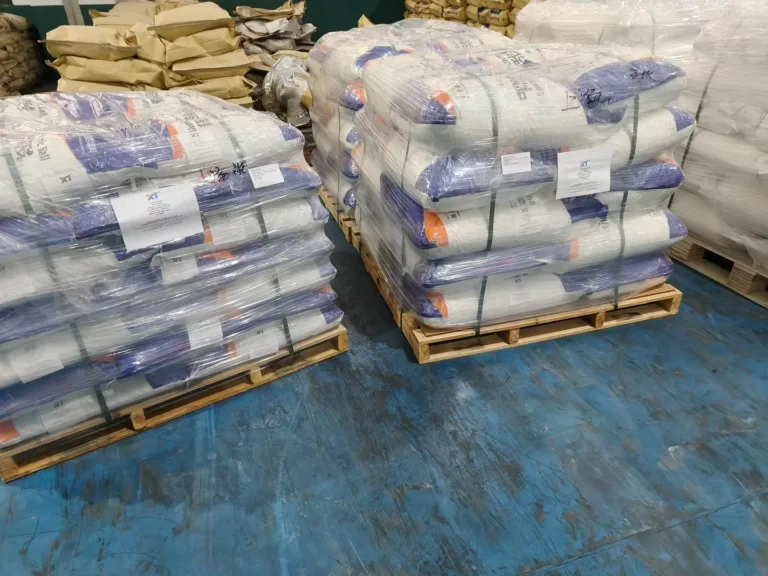
In the production of absolute ethanol, 3A molecular sieve has become the core adsorbent for alcohol dehydration processes, thanks to its unique “molecular sieving” properties. Whether for industrial alcohol dehydration, fuel ethanol production, or high-end applications such as lithium battery electrolyte solvents, 3A molecular sieve plays an irreplaceable role.
Principle: Why 3A?
Alcohol dehydration faces a core challenge: at atmospheric pressure, ethanol and water form an azeotrope (95.6 wt% ethanol, 78.2°C), making it impossible to obtain absolute ethanol through conventional distillation alone. The pore size of 3A molecular sieve is approximately 3 angstroms (Å)—right between the diameter of water molecules (approx. 2.8Å) and ethanol molecules (approx. 4.4Å).
This “molecular sieving” effect determines that water molecules can enter the molecular sieve channels and be adsorbed, while ethanol molecules are effectively excluded due to their larger size, enabling selective dehydration. Studies have shown that 3A molecular sieve has a much stronger adsorption affinity for water than for ethanol, and maintains good water adsorption performance even at elevated temperatures, making it highly valuable for industrial applications.
Key Advantages
1. High Selectivity, Low Co-Adsorption
Compared with 4A or 5A molecular sieves, 3A molecular sieve has extremely low co-adsorption of ethanol. Although ethanol has a higher enthalpy of adsorption on 3A molecular sieve, the steric hindrance effect prevents ethanol molecules from entering the 3A pores. This enhances water selectivity, thereby improving water adsorption capacity and drying performance.
2. Excellent Stability and Durability
Industrial applications require adsorbents that can withstand frequent regeneration cycles, such as Pressure Swing Adsorption (PSA) or Temperature Swing Adsorption (TSA). After high potassium exchange treatment, 3A molecular sieve exhibits good structural stability. Even after process upsets (e.g., water shock events), it can recover most of its water adsorption capacity and drying performance. Its abrasion resistance, crush strength, and service life all meet long-term industrial operation requirements.
3. Low Energy Consumption, High Efficiency
The application of PSA technology allows 3A molecular sieve to be regenerated simply by pressure reduction, eliminating the need for high-temperature thermal purge and avoiding the bed degradation issues associated with traditional thermal regeneration. The PSA process offers several advantages: deep dehydration, low energy consumption, long bed life, and freedom from fermentation by-product interference. Reducing bed volume also lowers pressure drop, decreases regeneration power consumption, and improves ethanol recovery rates.
Application Scenarios
3A molecular sieve is used across a wide range of alcohol drying applications:
Fuel Ethanol Production: Fuel ethanol used as a gasoline additive requires strict dehydration. 3A molecular sieve is the standard adsorbent in VPSA (Vacuum Pressure Swing Adsorption) dehydration processes.
Industrial Alcohol / Absolute Ethanol: High-purity anhydrous ethanol is required in chemical, pharmaceutical, cosmetics, and other industries.
Lithium Battery Electrolyte Solvents: The production of carbonate solvents (e.g., dimethyl carbonate, diethyl carbonate) is highly sensitive to moisture. Raw ethanol requires deep dehydration, and 3A molecular sieve provides a reliable drying solution.
Isopropanol and Other Polar Solvent Drying: 3A molecular sieve is also suitable for deep dehydration of isopropanol and other polar organic solvents.
Operating Conditions & Influencing Factors
The adsorption performance of 3A molecular sieve is significantly affected by operating conditions. Studies have shown that feed flow rate, feed temperature, bed height, and feed concentration all influence the breakthrough curve during adsorption. Specifically:
Temperature: Higher bed temperature shortens breakthrough time; lower temperatures favor adsorption.
Pressure: Higher pressure increases breakthrough time.
Bed Height: Increased bed height prolongs breakthrough time.
In actual process design, these parameters should be optimized according to specific operating conditions to achieve the best dehydration efficiency and economic performance.
Summary
With its precise pore size, high water/ethanol selectivity, excellent mechanical strength and thermal stability, and low energy consumption in PSA processes, 3A molecular sieve has become an indispensable adsorbent in the alcohol dehydration field. From traditional industrial alcohol to new energy lithium battery materials, 3A molecular sieve is key to achieving efficient, economical, and reliable dehydration.
XINTAO — Your Trusted Partner in Adsorbent Solutions.
Email: info@xintaokeji.com
Website: www.xintaokeji.com